
72 pages | 12 units | KDP Paperback
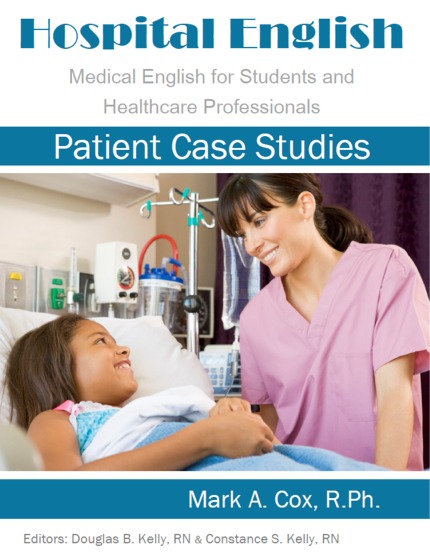
Hospital English: Patient Case Studies
Medical English for Students and Healthcare Professionals
A medical English textbook built around patient stories. Each of the 12 units presents a realistic hospital case study - a patient arrives, is diagnosed, receives treatment, and is counseled by a nurse or case manager. Students read the case, discuss it, then learn about the medical condition in depth. Designed for nursing and allied health students with or without prior medical knowledge, and developed from 20+ years of teaching medical English at nursing colleges in Japan.
Each unit is built around a real-world patient case. Students learn vocabulary, read the case, answer comprehension questions, discuss it in pairs, then study the medical condition in depth - until they can talk about the topic confidently without the book.
Infections
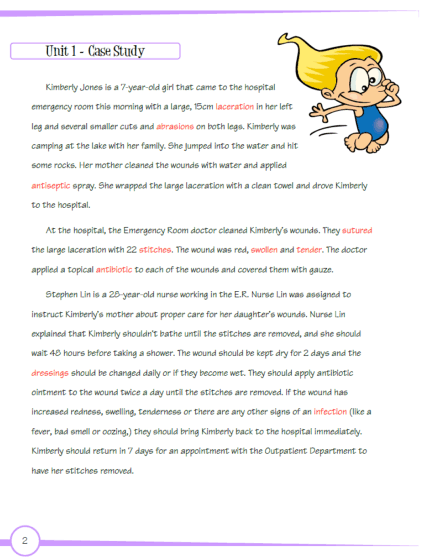
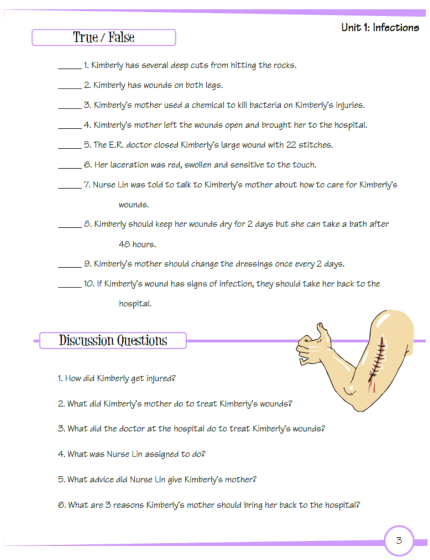
Kimberly, a 7-year-old girl, arrives at the E.R. with a 15cm laceration and abrasions from a lake accident. The wound is sutured and a nurse instructs the mother on wound care and infection signs.
Describe wounds and wound care vocabulary
Explain infection signs to a patient or family member
Discuss pathogens, symptoms, and first-aid care
Fractures
Tom, 58, falls down a flight of stairs at a train station and suffers fractures to his leg, wrist, and ribs. He is assessed in the Orthopedic Unit and a nurse evaluates his readiness for discharge.
Name fracture types and symptoms
Describe diagnostic tests and treatment
Discuss cast care and recovery timelines
Dementia
Sandra, 78, lives alone and is forgetting to take her medications and manage daily tasks. A case management nurse meets with her and her daughter to evaluate care options and next steps.
Explain dementia symptoms and progression
Discuss memory loss and daily living challenges
Describe care plan options for elderly patients
Allergies
Ann, 21, is stung by a bee in her garden and goes into anaphylactic shock. She uses her mother's epinephrine auto-injector and is taken to the E.R., where a nurse reviews her atopy history.
Explain allergic responses and anaphylaxis
Discuss allergen triggers and avoidance
Describe antihistamine and epinephrine use
Burns
Steve, 12, burns his face, neck, and arm when hot oil splashes while he is making french fries. He develops blisters and a fever overnight and is admitted to the Pediatric Unit for monitoring.
Classify burns by degree and severity
Describe burn treatment and infection risks
Explain discharge instructions for burn care
Hypertension
John, 67, calls 911 after chest pain and pressure at home. Tests confirm a heart attack. A care manager organizes follow-up meetings covering diet, exercise, smoking cessation, and medication.
Explain how hypertension damages the body
Describe heart attack symptoms and treatment
Discuss lifestyle modifications for cardiac health
Food Poisoning
Chris, 16, is a soccer player at a summer camp. After contaminated food at the cafeteria, he and several teammates develop Norovirus. He is admitted for I.V. fluid replacement therapy.
Describe food poisoning symptoms and causes
Explain dehydration and oral rehydration therapy
Discuss assessment and nursing care for GI illness
Arthritis
Thomas, 72, has rheumatoid arthritis and his knee pain has become so severe he is experiencing incontinence. A public health nurse evaluates his care plan and discusses surgery and mobility options.
Explain arthritis types, causes, and symptoms
Discuss joint care and pain management options
Describe rehabilitation and surgical considerations
Diabetes
Donna, 67, has pre-diabetes and presents with fatigue, tingling feet, and non-healing sores. A fasting blood glucose test confirms she has advanced to Type 2 diabetes. A nurse reviews her care plan.
Explain how diabetes affects the body
Describe blood glucose monitoring and targets
Discuss diet, exercise, and medication management
Pneumonia
Doug, 69, a heavy smoker, stops his antibiotics early after a respiratory infection. His condition worsens into pneumonia. He is admitted to the Pulmonary Care Unit and agrees to attempt smoking cessation.
Describe pneumonia symptoms and diagnosis
Explain antibiotic therapy and oxygen treatment
Discuss the health benefits of smoking cessation
Metabolic Syndrome
Kim, 52, has struggled with obesity her whole life and has diabetes, hypertension, and hyperlipidemia. She collapses at work with respiratory distress and is admitted for possible congestive heart failure.
Explain what metabolic syndrome is and how it develops
Describe insulin resistance and its causes
Discuss weight management and glycemic control
Anorexia Nervosa
Leslie, 21, a university student, arrives in the E.R. with severe stomach cramps and constipation. She is 22kg below her ideal weight. A nursing student is assigned to assess her eating habits and willingness to see a psychiatrist.
Explain anorexia as a mental and physical disorder
Describe warning signs and long-term health effects
Discuss the team approach to eating disorder treatment
Every unit follows the same 7-part structure. Students and teachers always know where they are and what comes next. The goal is not just to read the content - it is to be able to speak about it confidently without the book.
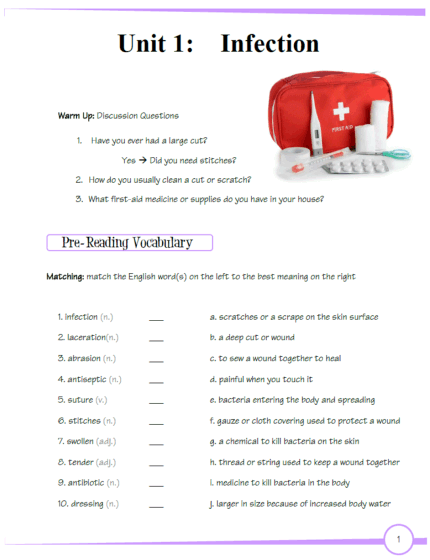
2-3 open questions to activate prior knowledge and personal experience before reading. Done in pairs.
10 key words from the case study. Students match words to English definitions, then review with the instructor before reading.
A realistic patient story covering the incident, hospital treatment, and nurse or case manager counseling. Students read in pairs and discuss paragraph by paragraph.
10 comprehension questions confirm students understood the case. Then 6 discussion questions push students to retell the case in their own words without the book.
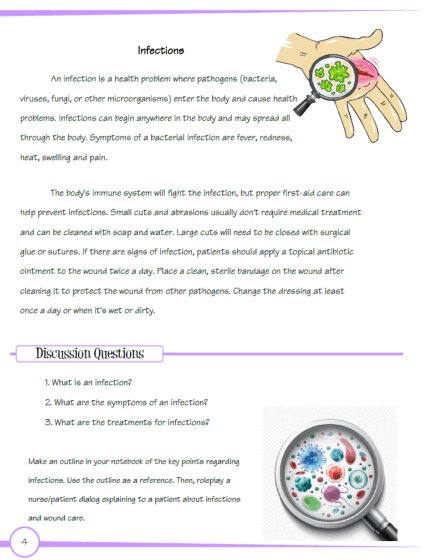
A clear explanation of the medical condition - what it is, symptoms, diagnosis, and treatment. Students discuss 3 focus questions and create an outline to use as a reference for role-play.
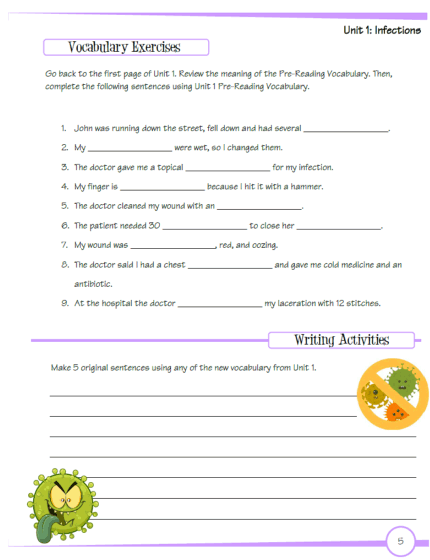
Fill-in-the-blank sentences using the pre-reading vocabulary - often in a new context. Includes a writing activity where students make 5 original sentences.
A reference glossary of additional words from the unit, plus 3 suggested follow-up tasks: write a patient follow-up story, present the patient verbally, and quiz each other on vocabulary.
Click any page below for a closer look.
Supplementary materials for classroom and self-study use - additional vocabulary exercises, audio recordings, sample tests, and more at HospitalEnglish.com.
Mark A. Cox, R.Ph., MAAL is a US-licensed pharmacist (University of Connecticut School of Pharmacy, 1997) with hospital experience at Yale New Haven Medical Center and Hartford Hospital. He has lived in Japan since 2000 and has been teaching English as a foreign language since then. Since 2005 he has taught medical English at nursing technical colleges, and since 2009 at a nursing university in Nagano. He holds a Master of Arts in Applied Linguistics from the University of New England, Australia (2010).
The content for this textbook was written for - and used for 4 years with - his first-year university nursing and welfare students before being published. Editors Douglas B. Kelly, RN, MSN, BCNEA and Constance S. Kelly, RN, MPA, CNOR are US registered nurses with extensive hospital experience across the United States and internationally.
His free teaching resources are available at MES-English.com, ToolsForEducators.com, and MES-Games.com, among others.
