
Disease State Directors: these articles prepare students to explain about the disease itself and also be able to relay the important information that patients should know.
Asthma
Pre-Reading Vocabulary:
asthma
breath
breathe
case
condition
disease
exposure
features
immune system
infection
obstruction
pressure
risk factors
sensitivity
signs
symptoms
tightness
treatment
wheezing
Listen to the 2 articles:
Listen and try to answer the discussion questions or take the quiz. You can also listen and read along with the scripts below.
Article 1: Asthma 
Quizzes for Article 1: multiple choice questions, fill in the blanks
Listen to the audio file for Asthma: The Disesase and then you may advance to the discussion or comprehension questions. Listen as many times as you need to answer the questions. (You can read the full articles below.)
Article 2: Asthma
Listen to the audio files and then you may advance to the discussion or comprehension questions. Listen as many times as you need to answer the questions. (You can read the full articles below.)
Follow-ups:
- After completing the test exercises, try the speaking activity with the conversation questions.
- Roleplay a nurse patient dilog where the nurse explains about the disease to a new asthma patient.
For self study: Verify you understand the key words for the articles. Then try to answer the following conversation questions, speaking out loud.
Discussion Questions:
- What are the main features of asthma?
- What are some triggers for asthma attacks?
- What happens in the body during an asthma attack?
- What information is important to tell the patient?
Reading Article 1: read the article and then answer the questions.
Article 1: Overview of Asthma
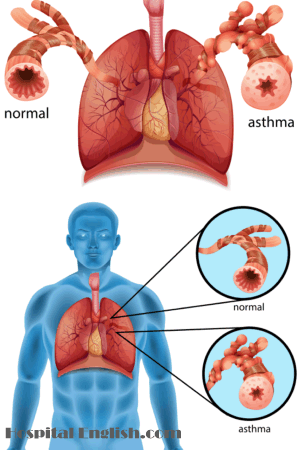
Asthma is a disease of the lungs that is that is characterized by tightening of the air pathways. Common symptoms of asthma are wheezing, shortness of breath, coughing, chest pain, tightness or pressure. Many of these conditions are reversible with medication but not 100% reversible in all patients. Some common features of asthma are inflammation, airway obstruction and airway sensitivity. Some risk factors for asthma are a family history of asthma, regular lung infections, presence of allergies, exposure to tobacco smoke, low birth weight, and being male.
The current rise in asthma cases among children is alarming. Asthma may occur at any age but is very common in children. Approximately 10% of children have asthma and that rate may rise in the future. Experts don't agree why the rate is increasing but here are some ideas:
- Children are being exposed to more triggers (things that bring on asthma attacks; dust, tobacco smoke, pollution)
- Children don't have strong immune systems (they ren't exposed to many childhood diseases.)
- Decreases in the rates of breast feeding may also play a role.
Asthma is a disease that causes many problems for the patient. However, it can be controlled. With the right information and medical attention medical professionals can prevent many deaths.
Tests for this article: multiple choice questions, fill in the blanks

Comprehension Questions:
1. What are some of the common symptoms of asthma?
2. Is asthma reversible with medication? Explain your answer.
3. What are some risk factors for asthma?
4. What population is seeing a rise in asthma cases?
5. What are two theories why the rate is increasing in this population?
Reading Article 2: read the patient information article and then answer the questions.
Article 2: Information for the Patient
Asthma is a disease of the lungs that causes wheezing, coughing, chest tightness and difficulty breathing. It can be very scary for the patient. Luckily, asthma and its effects are reversible with medication. There are a few options for asthma treatment:
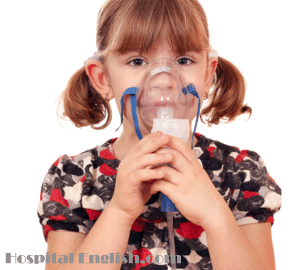
- Breathing machines (or nebulizers) are machines that turn liquid medication into mist. A mask is used and treatment takes about 10-15 minutes and is given several times per day.
- Inhalers are common for older patients and medication is breathed in using a spacer.
- Syrups and other oral medications are available, but aren't useful for asthma attacks because their effects take time.
Asthma attacks are the periods when symptoms suddenly become worse. Some common triggers for these attacks are exercise, infections, dust, tobacco smoke, allergens, cold air and nervousness. Limiting exposure to these triggers may help improve quality of life. When an asthma attack occurs, take your medication according to your asthma action plan, wait 10 to 15 minutes if symptoms worsen or don't improve immediate medical attention may be necessary. Some danger signs are severe wheezing or coughing, trouble walking, and blue lips or fingernails. If any of these danger signs occur go to the emergency room or call 911.
Asthma is a lifelong disease. Some people have fewer attacks as they grow older, but most patients see a return of symptoms in their 30s and 40s. The effects of asthma attacks on the lungs can cause serious problems later in life. Proper management of asthma is very important.
Comprehension Questions:
1. What are 3-4 triggers for asthma attacks?
2. What are asthma attacks?
3. How can you reverse the effects of an asthma attack?
4. What are some danger signs associated with asthma attacks?
5. What should a patient do if any danger signs occur?

End User License Agreement: You are free to download any resource from this site as an end user and MES-English.com grants you an End User License with the following restrictions: You may not redistribute, copy, modify, transfer, transmit, repackage, charge for or sell any of the materials from this site. You may use photocopies or printouts for distribution to your students. MES reserves the right to terminate or make changes to this agreement for any reason and without notice.
Copyright © 2006 - 2024 Hospital English | restrictions | privacy | about | contact